Scaffolding, Shutdowns, or Rope Access? Why Smart Facilities Are Choosing the Faster Option
Every facility faces the same dilemma sooner or later: critical inspection or maintenance work needs to happen, but access is the problem. Traditional solutions—scaffolding, lifts, or full shutdowns—often cost more time and money than the work itself. In Louisiana, where weather windows, corrosion risk, and operational uptime all matter, access delays can quickly turn into integrity problems.
Facilities that work with experienced energy services in Louisiana are increasingly choosing a different approach—one that prioritizes speed, safety, and precision over disruption.
The Hidden Cost of Traditional Access Methods
Scaffolding is familiar, but it’s rarely efficient. Design, erection, inspection, and dismantling all consume time before a single inspection begins. In active facilities, this often means partial shutdowns, restricted work zones, or extended outages.
Even when lifts are available, their reach is limited, and repositioning introduces additional safety and scheduling challenges. For inspections that should take hours, access alone can stretch timelines into days.
Facilities that rely on Louisiana energy services often discover that the cost of access outweighs the cost of inspection itself.
Rope Access Changes the Equation
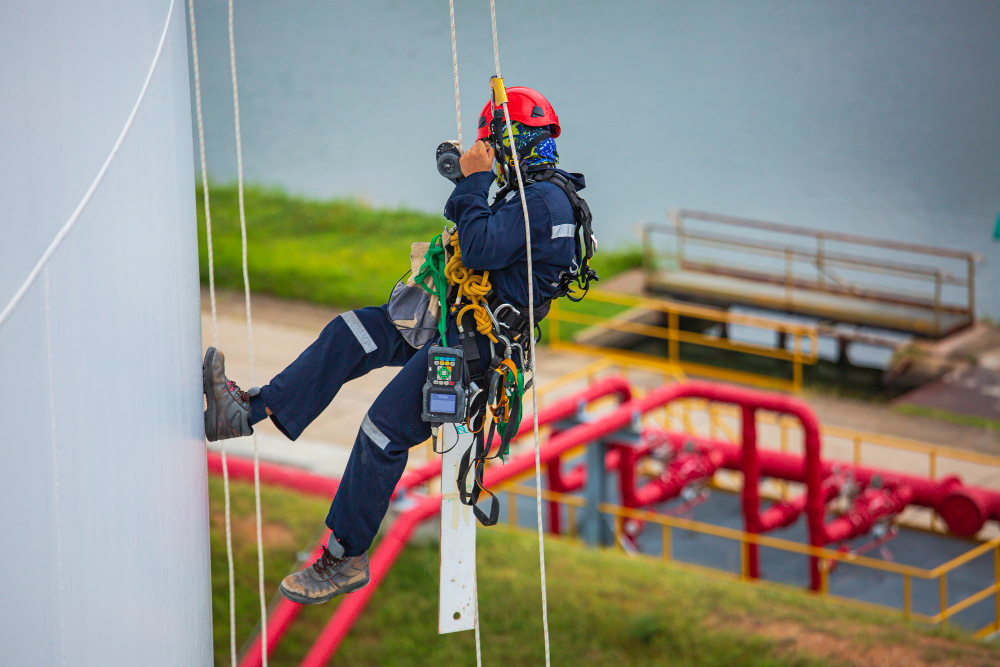
Modern rope access solutions eliminate many of the inefficiencies tied to traditional access. Certified technicians can reach elevated, confined, or complex structures quickly—without extensive setup or heavy equipment.
Instead of building access around the work, rope access allows the work to begin immediately. This shift reduces downtime, limits disruption, and keeps operations moving while inspections or maintenance are performed.
For facilities managing tight schedules, that difference matters.
Faster Access Leads to Better Inspection Decisions
When access is easy, inspections happen more frequently. This is one of the most overlooked benefits of rope access. Facilities no longer postpone inspections simply because setup is inconvenient or expensive.
Routine mechanical integrity inspection becomes more practical when access barriers are removed. Inspectors gain consistent visibility into asset condition, making it easier to track degradation trends instead of reacting to surprises.
More access leads to more data—and better decisions.
Corrosion Doesn’t Wait for the Next Outage
In Louisiana’s environment, corrosion progresses continuously. Delayed inspections allow minor coating failures to evolve into metal loss, leaks, or structural concerns.
Facilities that combine rope access with corrosion control and protective coatings address issues early—before corrosion accelerates beyond manageable limits. Technicians can access vertical structures, overhead piping, and insulated systems without waiting for full shutdowns.
That flexibility keeps corrosion management proactive instead of reactive.
Rope Access Supports Accurate Surface Evaluation
Surface preparation, coating breakdown, and insulation damage are often located in hard-to-reach areas. Without access, these issues go undocumented.
Integrating rope access with paint inspection and insulation programs ensures that coatings and insulation systems are evaluated where they actually fail—not just where they’re easiest to reach.
This improves inspection accuracy and extends the service life of protective systems.
Tank and Vessel Work Without Full Shutdowns
Internal tank inspections and vessel maintenance often require cleaning, access, and confined space planning. Rope access can support portions of this work by improving reach and reducing reliance on scaffolding inside large vessels.
When paired with proper tank and vessel cleaning, rope access allows inspection teams to work efficiently while minimizing confined space risks.
Better access means inspections happen when they should—not when schedules finally allow.
Fabrication and Repairs Benefit from Precision Access
Fabrication repairs and structural modifications often occur in elevated or awkward locations. Rope access allows technicians to perform targeted work without dismantling surrounding systems.
Facilities that rely on integrated construction and fabrication services gain efficiency when access methods don’t dictate the repair strategy. Precision access supports precision work.
That combination reduces rework and improves long-term integrity.
Leak Containment Without Compromise
Minor leaks often occur at flanges located in elevated or congested areas. Rope access allows safe installation and inspection of containment systems without major access setup.
When paired with flange cuff technology, rope access helps manage leaks responsibly while underlying integrity concerns are evaluated and corrected.
This approach supports safety without delaying corrective action.
Safety Improves When Access Is Planned, Not Rushed
One misconception about rope access is that it compromises safety. In reality, properly executed rope access programs enhance safety by reducing exposure time, eliminating unnecessary equipment, and limiting congestion in work areas.
Facilities that align access strategies with safety compliance standards reduce risk while improving execution speed. Certified rope access technicians follow strict procedures designed specifically for work at height.
Planned access is safer than improvised access—every time.
Why Louisiana Facilities Are Making the Shift
Facilities across Louisiana face unique challenges: aggressive corrosion environments, limited outage windows, and complex infrastructure. Rope access addresses these realities by removing access as a limiting factor.
Organizations that partner with experienced providers like Aslan Energy benefit from integrated access strategies that support inspection, maintenance, and compliance without unnecessary disruption.
Instead of asking whether access is possible, they focus on what work needs to be done.
Choosing Speed Without Sacrificing Control
Rope access isn’t about cutting corners—it’s about eliminating waste. By reducing setup time and improving reach, facilities gain control over inspection schedules and maintenance planning.
For teams seeking reliable energy services professionals in Louisiana, rope access offers a smarter path forward—one that balances safety, efficiency, and integrity in demanding environments.